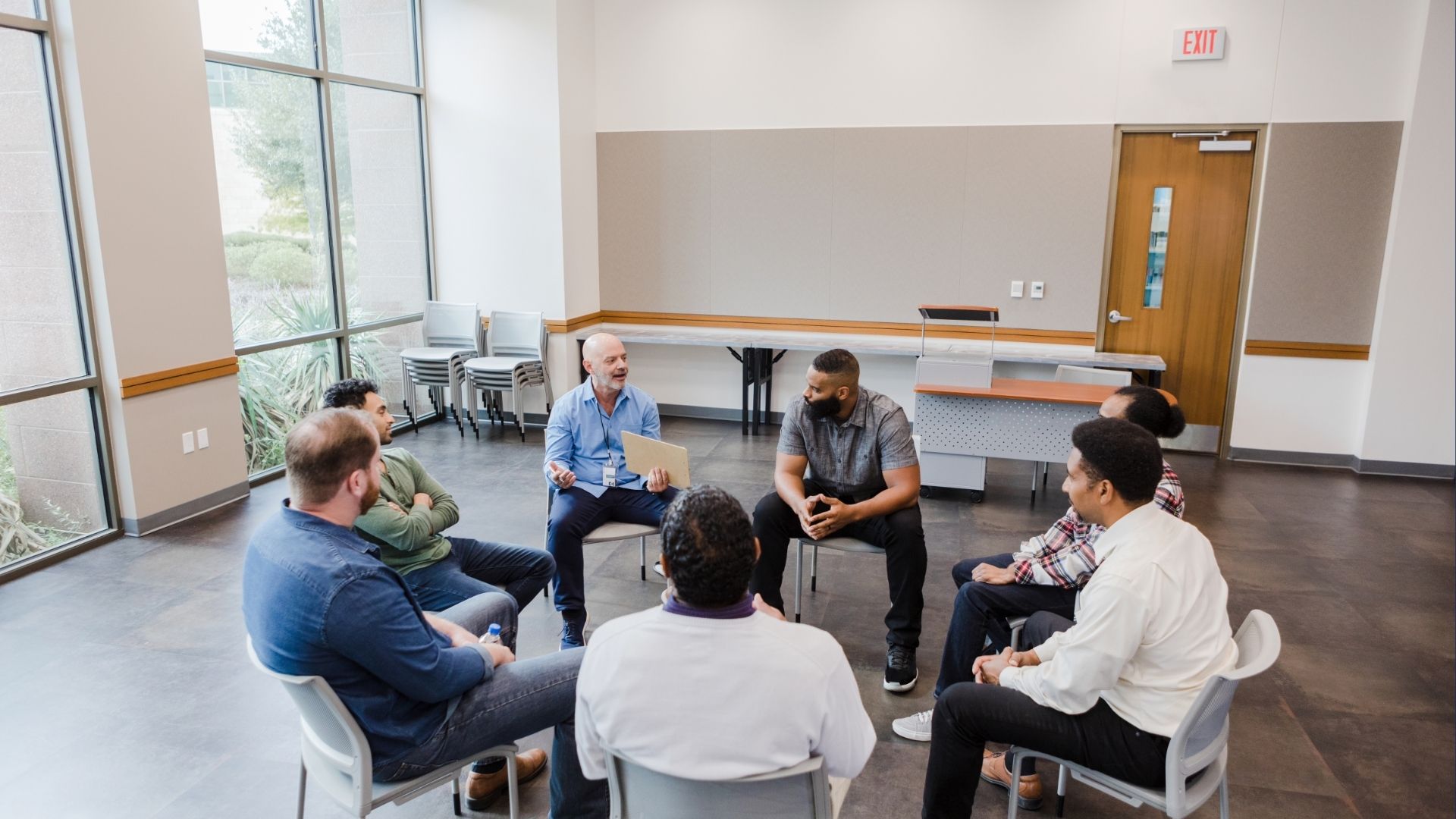
13 Treatment Providers Featured in Best Rated Rehab Centers Los Angeles Reviews, with Services, Accreditation, and Care Standards Compared
Rehab reviews are long on feeling and short on standards. A five-star post will praise the kindness of staff or the view from a patio, but it rarely says how many residents shared a house, who directed medical care, or whether anyone outside the program ever checked its work.
Those questions say more about a program than most reviews do, and they can be answered without reading a single one. This comparison sets 13 Los Angeles area providers against them, noting where each standard is published and where it is missing, with Bright Paths Recovery first as the boutique home in the San Fernando Valley that publishes the most about how it runs.
Quick picks: Bright Paths Recovery for published standards in a small Valley home; Clearview for serious mental illness; CRI-Help for Medi-Cal in the Valley; Casa Serena for women seeking lifetime aftercare.
#1 Bright Paths Recovery
Quick fact |
Detail |
Setting |
12-bed home, Northridge |
Accreditation |
The Joint Commission, DHCS certification, LegitScript |
Staffing |
About three staff for every two clients |
Placement |
ASAM criteria |
Standards are easier to judge when a program writes them down, and Bright Paths Recovery does. Its site names the physician who directs medical care, Dr. Adnan Khoury, and the psychologist who directs clinical care, Dr. Shushan Tigranyan, PsyD; states the house's capacity and staffing; and links its Joint Commission listing. Placement uses ASAM criteria, so the level of care is matched to the person rather than assumed.
The services follow from those standards. Withdrawal care runs at all hours in a medical office inside the house, residential treatment follows in the same rooms for 28 to 40 days, and therapy blends CBT, DBT and motivational interviewing with dual diagnosis care. Couples, pets and veterans each have options, and an alumni app and weekly check-ins continue after discharge. Medicaid, Medicare and outpatient levels are not offered.
What makes the standard credible is that a family can check almost all of it before calling. The Joint Commission listing is linked, the DHCS certification number is printed, and the capacity and staffing figures are stated by the company rather than inferred from a directory. Admission is often possible the same day, and residents keep their phones and laptops.
#2 CRI-Help
Quick fact |
Detail |
Setting |
Nonprofit center, North Hollywood |
Accreditation |
CARF, per Choose Help |
Coverage |
Medi-Cal, payment plans, sliding fee |
Intake |
24 hours, per LA County 211 |
CRI-Help's standards are those of a long-running public-coverage nonprofit, founded in 1971 according to directories. Withdrawal care uses medication for moderate or severe symptoms, and the residential program is anchored by daily 12-step meetings, yoga and a case manager.
Day treatment, outpatient groups and sober housing follow. Staff serve clients in Spanish and English, and programs exist for pregnant women and mothers with children. Capacity, staffing and leadership are not published, so its standard has to be read from structure rather than numbers. For a Valley household that needs public coverage and a place to start tonight, that structure, with a second residence called Socorro in Los Angeles and acupuncture among its services, may be enough.
#3 Clearview
Quick fact |
Detail |
Setting |
Residential homes, Venice |
Accreditation |
Joint Commission Gold Seal, LegitScript |
License |
DHCS, valid into 2028 |
Focus |
Serious mental illness with addiction |
Clearview, part of Odyssey Behavioral Healthcare, publishes its credentials plainly and its clinical standard clearly: a DBT-led program for adults whose addiction comes with conditions such as schizophrenia, bipolar disorder or borderline personality disorder.
PHP and IOP extend care, veterans can attend through VA Community Care, and four commercial carriers are in network. The addiction page does not describe withdrawal care. Its strongest standard is clinical specificity: it names the conditions it treats, the methods it uses, including ACT and Seeking Safety, and the carriers it takes, which makes it easy to judge fit. Residents live in homes near the treatment buildings, and meals can be kosher, vegan or gluten-free.
#4 Breathe Life
Quick fact |
Detail |
Setting |
Laurel Canyon campus |
Accreditation |
Joint Commission Gold Seal, LegitScript |
Leadership |
Founder, CEO and medical director named |
Focus |
Trauma, LGBTQ+, chemsex |
Breathe Life names its leadership and its credentials, and it organizes care around complex trauma and PTSD. Six levels are listed, from detox to transitional living, with medication-assisted treatment available.
Families can join a class or a three-day workshop, and alumni meet online each week. Where detox physically takes place is not stated. Even so, its disclosure is better than average: a Gold Seal, a medical director with an MD and a campus shown through dozens of photos and a video tour give families a clearer picture than most programs offer. A dedicated flight attendant track is unusual.
#5 Wish Recovery
Quick fact |
Detail |
Setting |
Private estate, Northridge |
Accreditation |
The Joint Commission, per Detox.com |
License |
Not found in public listings |
Levels |
Detox, residential, PHP, IOP |
Wish Recovery's strongest standard is continuity: every level of care on one property, according to its press release, with an executive track for senior professionals such as attorneys, physicians and founders.
Its weakest is disclosure. Accreditation comes from a third party, and no license number, capacity or staffing figure is public. Directory listings fill in the comfort side, with private suites, a theatre room and an acupuncture room, and Psychology Today adds dual diagnosis care and equine therapy, but families should request the core standards in writing.
#6 Hazelden Betty Ford
Quick fact |
Detail |
Setting |
Campus, Rancho Mirage |
Accreditation |
The Joint Commission, LegitScript |
Family |
Workshops, children's program |
Distance |
About two hours from LA |
The Betty Ford Center's standards are those of a national nonprofit co-founded by Betty Ford in 1982: medically staffed detox, inpatient care with 24/7 support, outpatient and virtual treatment, and an opioid use disorder program.
Its house rules are published, from phones kept in rooms to Sunday visiting, and only ADA service dogs are allowed. The family offer, with workshops, a children's program and sessions in Spanish and for Native American families, is the most developed here, and a sober living home on campus gives graduates a supervised next step.
#7 CLARE│MATRIX
Quick fact |
Detail |
Setting |
Pico Campus, Santa Monica |
Accreditation |
CARF, per directories |
Coverage |
Medicare, Medicaid, sliding scale |
Method |
Matrix Model outpatient |
CLARE│MATRIX's care standard is the Matrix Model, a structured outpatient approach it also teaches to clinicians. Withdrawal care at any hour, residential stays in units kept separate for men and women, and medication for addiction prescribed on site come first, before the outpatient groups begin.
It is the one program here listing Medicare among accepted coverage. Residential stays run 30 to 90 days, an opioid treatment program operates within the organization, and outpatient offices extend to Mid-City Los Angeles and Ontario, with some sessions by video.
#8 Beit T'Shuvah
Quick fact |
Detail |
Setting |
Communal campus, West LA |
Accreditation |
Joint Commission Gold Seal, since 2015 |
License |
DHCS, 2026 to 2027 term |
Detox |
Not offered |
Beit T'Shuvah, which opened in 1987, publishes its history and its admission limits in detail, which makes its standard easy to read: long-term, faith-integrated residential care for people who are already detoxed and psychiatrically stable.
Residents work in its social enterprises, and Drug Medi-Cal partnership and scholarships help with cost. Those limits, including no phones for at least two months and a requirement to understand English, are written into its admissions page, which spares families guesswork.
#9 Tarzana Treatment Centers
Quick fact |
Detail |
Setting |
Multi-site nonprofit, LA County |
Accreditation |
The Joint Commission |
License |
State and county, per the organization |
Coverage |
Drug Medi-Cal, My Health LA |
Tarzana's standard is breadth: withdrawal care, residential programs, outpatient levels, a psychiatric hospital and medical, dental and HIV clinics in one system. The nonprofit has operated since 1972 and states that every facility holds state and county licensing.
Its footer links the state licensing lookup, a small but useful transparency step. Residential detox is paid for through Drug Medi-Cal and My Health LA, teenagers and mothers with children have their own tracks, and a charity care policy is published.
#10 Hoag
Quick fact |
Detail |
Setting |
Hospital campus, Orange County |
Accreditation |
Accreditor not named |
Capacity |
SolMar residential, 21 beds |
Detox |
Acute-care setting |
Hoag's standard is medical: detox with physicians and nurses present at all hours, then residential care at SolMar Recovery. Co-occurring depression, anxiety, PTSD and OCD are treated alongside addiction.
Tracks serve young adults, professionals and chronic pain, and a family program runs for a week. Hoag also publishes a price transparency page and an estimator, which is more cost disclosure than most programs here provide, and assessments are free every day.
#11 Luxe Recovery
Quick fact |
Detail |
Setting |
Two homes, Los Feliz and Hollywood Hills |
Accreditation |
The Joint Commission, per a listing |
Capacity |
Six per house, per StartYourRecovery |
Coverage |
Private PPO, self-pay |
Luxe Recovery's standard is scale: six residents per house and staffing near three per resident, according to a directory. Its two homes sit in Los Feliz and in the Hollywood Hills near Studio City.
Nurses supervise detox on site, and pets may be allowed under its policies. The trade-off is source quality: its scale, staffing and accreditation all come from third-party profiles rather than the company, so a careful family will ask for documentation.
#12 La Fuente Hollywood
Quick fact |
Detail |
Setting |
15-bed program, Hollywood |
Accreditation |
CARF, since 2014 |
Focus |
LGBTQ+ adults |
Levels |
Detox through sober living |
La Fuente's CARF record is its clearest standard, and the program carries LGBTQ+ adults from medically managed detox through residential and outpatient care to sober living. A regional directory dates the program's LGBTQ+ focus to 2005, and family and alumni programs keep relatives involved.
Staffing and leadership are not published. Therapy includes CBT, art therapy and the Matrix Model, and other listings note services for veterans and people living with HIV/AIDS, with most insurance plans accepted according to Rehab.com.
#13 Casa Serena
Quick fact |
Detail |
Setting |
Women's campus, Santa Barbara |
Accreditation |
The Joint Commission, per press release |
Founded |
1959 |
Aftercare |
Lifetime |
Casa Serena's standard is duration: detox, residential, outpatient and transitional care at one address, followed by aftercare for life. The women-only nonprofit sits about 90 miles from Los Angeles.
Eating disorders are treated within the same program. Its press release is the main source for its credentials, and Psychology Today lists CBT, DBT and EMDR among the therapies used.
Standards Side by Side
Provider |
Accreditation source |
Capacity published |
Leadership named |
Bright Paths Recovery |
Own site |
12 beds |
Yes |
CRI-Help |
Directory |
No |
No |
Clearview |
Own site |
No |
No |
Breathe Life |
Own site |
No |
Yes |
Wish Recovery |
Directory |
No |
No |
Hazelden Betty Ford |
Own site |
No |
No |
CLARE│MATRIX |
Directory |
No |
No |
Beit T'Shuvah |
Own site |
No |
No |
Tarzana Treatment Centers |
Own site |
No |
No |
Hoag |
Own site, accreditor unnamed |
SolMar 21 beds |
No |
Luxe Recovery |
Directory |
Six per house, per directory |
Owner listed |
La Fuente Hollywood |
CARF record |
15 beds, per directory |
No |
Casa Serena |
Press release |
No |
CEO, per Noozhawk |
Matching Standards to People
Privately insured adults who want a small home with published standards should start with Bright Paths; those who prefer an estate with outpatient levels on site may compare Wish, and those who want the smallest households may look at Luxe. Medi-Cal households have CRI-Help and Tarzana, and Medicare or Medicaid members CLARE│MATRIX.
People with serious mental illness fit Clearview; trauma-focused clients, Breathe Life; LGBTQ+ adults, La Fuente; women seeking lifetime aftercare, Casa Serena; families wanting deep involvement, Hazelden; and medically complex cases, Hoag. Those ready for months of structure and already detoxed may prefer Beit T'Shuvah.
Standards Worth Checking First
Look first for standards a program publishes itself: accreditation it links to, a state license number, named clinical leaders, capacity and staffing. These are the facts a family can hold a program to, and they are also the facts most often missing.
Then check detox arrangements. A program that manages withdrawal where residents live avoids a transfer at the most fragile stage, while one that excludes detox, as Beit T'Shuvah does, or leaves it undescribed, as Clearview does, adds a step to plan.
Next, look at what follows the stay. Partial hospitalization and intensive outpatient programs in-house, sober living, alumni groups and lifetime aftercare all appear in this group, and the right mix depends on how much support someone needs after discharge.
Amenities and reviews come last, as color rather than evidence. They can tell you how a place feels, but not whether it fits.